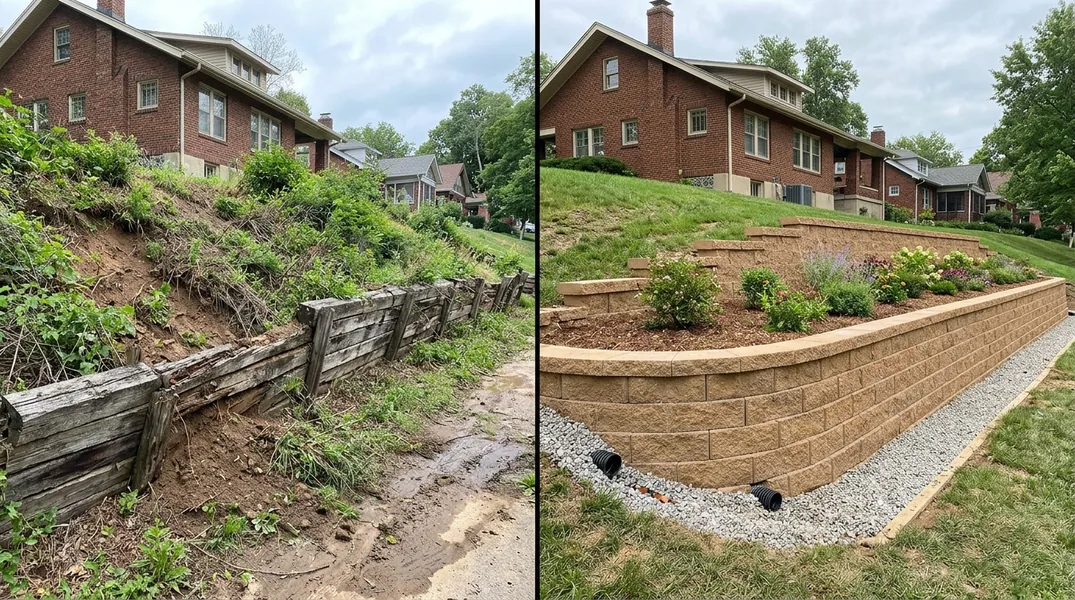
Understanding Hydrostatic Pressure and Spring Thaw Damage
When spring arrives in Indianapolis, homeowners often celebrate warmer weather and blooming gardens. However, for retaining wall owners, spring represents a critical season of stress and potential structural failure. The culprit is hydrostatic pressure, a force that builds behind retaining walls when water becomes trapped in the soil during spring thaw and heavy rainfall.
Hydrostatic pressure occurs when water saturates the soil behind your retaining wall faster than it can drain away. As the ground thaws and snowmelt combines with spring rains, water pressure increases exponentially against the back of the wall. Unlike the weight of soil alone, which a well-constructed wall can handle, hydrostatic pressure creates a pushing force that can exceed thousands of pounds per linear foot. This relentless pressure can cause walls to bow, crack, lean, or fail completely if proper drainage solutions aren't in place. Many homeowners don't realize their retaining wall is in danger until visible signs of failure appear.
The Freeze-Thaw Cycle and Its Impact on Retaining Walls
Indianapolis experiences dramatic temperature swings throughout winter and early spring, creating the perfect conditions for freeze-thaw damage. Water that seeps into small cracks and crevices in your retaining wall expands when it freezes, exerting tremendous pressure on the concrete or stone. When temperatures rise, the ice melts, leaving the wall slightly more damaged than before. This cycle repeats dozens of times each season, progressively weakening the structure.
The freeze-thaw cycle is particularly destructive to Concrete Retaining Walls because concrete is porous and naturally absorbs moisture. Over multiple seasons, this repetitive stress can cause spalling (surface flaking), deep cracks, and structural failure. The damage often starts small and invisible, making it critical to address drainage issues before freeze-thaw cycles have a chance to cause extensive damage. Homeowners who wait until spring to inspect their walls may discover that winter has already inflicted significant harm.
Why Retaining Wall Drainage is Non-Negotiable
The most effective defense against spring thaw and heavy rain damage is proper retaining wall drainage. Without adequate drainage, water has nowhere to go but to build up pressure behind your wall. A well-designed drainage system intercepts water before it can accumulate, channeling it safely away from the structure and preventing hydrostatic pressure from developing.
Drainage becomes especially critical in Noblesville and surrounding areas where clay-heavy soils are common. Clay drains slowly, meaning water sits behind retaining walls for extended periods during spring thaw. Without intervention, this standing water creates conditions for failure. A proper drainage system should include perforated drain pipe installed at the base of the wall, gravel backfill to promote water movement, and surface-level provisions to redirect runoff away from the wall. The investment in drainage now prevents far more expensive Retaining Wall Repair or Retaining Wall Replacement later.
The Role of French Drains in Retaining Wall Protection
A retaining wall french drain is one of the most effective solutions for managing water behind retaining walls. A French drain consists of a perforated pipe surrounded by gravel and filter fabric, installed at the base of the wall or along its length. The perforations allow water to enter the pipe, while the gravel provides a pathway for water movement and the filter fabric prevents soil from clogging the system.
French drains work by gravity, naturally directing water away from your retaining wall toward a lower elevation or a designated drainage area. This system is particularly valuable during spring thaw when water volume is highest. The drain intercepts water before it can build up pressure against the wall, protecting against the forces that cause bowing, cracking, and failure. When properly installed with appropriate slope and outlet, a French drain system can eliminate hydrostatic pressure problems almost entirely. Many homeowners find that adding a French drain to an existing retaining wall extends its lifespan by decades and prevents the costly damage that would otherwise occur.
Signs Your Retaining Wall Needs Drainage Improvements
Recognizing early warning signs of drainage failure can save you thousands of dollars. If you notice water pooling or seeping from the base of your retaining wall after rain or during spring thaw, this indicates inadequate drainage. Similarly, if the wall is leaning, bowing outward, or showing horizontal cracks, hydrostatic pressure is likely at work. Efflorescence, a white chalky substance on the wall surface, indicates water is moving through the concrete and carrying minerals to the surface.
Other red flags include vegetation growing unusually well immediately in front of or behind the wall (a sign of excess moisture), soil slumping away from the wall base, or gaps appearing between the wall and adjacent structures. Any of these signs warrant an immediate inspection by professionals who understand the unique drainage challenges in Indianapolis. The sooner you address drainage issues, the better your chances of preventing catastrophic failure. If you're seeing any of these warning signs, contact Indianapolis Retaining Wall at (463) 217-0386 to schedule a free estimate and professional assessment.
Protecting Your Retaining Wall Through Spring and Beyond
Spring maintenance is essential for retaining wall longevity. Clear gutters and downspouts to ensure water doesn't concentrate near your wall. Grade the soil around your wall so surface water slopes away rather than toward the structure. If your wall lacks a French drain system, consider adding one before the next heavy rain season arrives. These preventive measures, combined with proper initial installation or professional Retaining Wall Installation, can protect your investment for decades.
Professional installation matters enormously when it comes to drainage. A contractor experienced in Indianapolis' climate and soil conditions understands exactly where water problems occur and how to solve them permanently. Whether you need a new wall built with proper drainage from the start or improvements to an existing structure, Indianapolis Retaining Wall has the expertise to protect your property. Don't wait until spring thaw or heavy rain causes visible damage. Reach out today at (463) 217-0386 or visit our website to learn more about our drainage solutions and get a free estimate for your specific situation.
Looking for a professional retaining wall contractor in Indianapolis? Indianapolis Retaining Wall responds fast for all your retaining wall needs.
Get a Free QuoteOur services: Retaining Wall Installation · Retaining Wall Repair · Retaining Wall Replacement